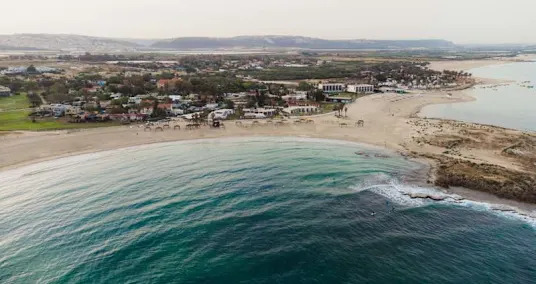
The discovery was made in an ancient shipwreck in the Dor Lagoon near the Carmel Coast, where archaeologists recovered nine pieces of unprocessed iron known as “blooms.”
Researchers from the University of Haifa said Wednesday that an underwater excavation off Israel’s northern Mediterranean coast uncovered what they described as the earliest known cargo of raw iron transported by ship, dating back around 2,600 years, Xinhua reported.
The discovery was made in an ancient shipwreck in the Dor Lagoon near the Carmel Coast, where archaeologists recovered nine pieces of unprocessed iron known as “blooms.” According to the university, the find provides direct evidence of how iron was transported in its earliest commercial stages.
The material was preserved in its original form, having solidified directly in a smelting furnace without undergoing forging or further refinement. Researchers said this distinguishes the cargo from later iron artifacts that typically show signs of shaping or tool-making.
Unlike copper and bronze, which could be melted into liquid form in ancient production processes, iron was heated with charcoal to produce a solid, porous mass. That mass was generally hammered to remove impurities and create denser material suitable for tools and implements.
The recovered blooms showed no indication of that secondary processing stage, suggesting they were transported immediately after production.

Earliest iron shipment discovered in ancient Mediterranean wreck
To determine the age and condition of the cargo, researchers conducted microscopic and chemical analyses.
Radiocarbon dating was also carried out on charred wood embedded in one of the pieces, helping confirm the timeline of the shipment. The findings were published in the journal Heritage Science.
Researchers said the cargo indicates that iron was being moved in raw form from production sites to other locations for further processing, pointing to a level of specialization in ancient manufacturing and trade networks in the Mediterranean.
The University of Haifa said the discovery provides new insight into early iron production and distribution practices in the region.
LATEST POSTS
- 1
 Recalled Super Greens diet supplement powder sickens 45 with salmonella
 - 2Israel halts defense sales to France, citing 'hostile attitude,' sources tell 'Post'
- 3Kona SUV: Exploring the Future with Hyundai's Visionary Hybrid
- 4Obamacare enrollment declines as US subsidies expire
- 5Two separate Israeli espionage cases uncover Iran-linked activities in Jerusalem, Ashkelon





- Most loved VR Game for Wellness: Which Keeps You Dynamic?
- IndiGo lands IATA chief Willie Walsh as new CEO
- One perk to marrying Richard Marx later in life? 'We don't have time' for stupid arguments, says Daisy Fuentes.
- Why is the Artemis 2 rocket launch different from all other rocket launches?
- Drones, physics and rats: Studies show how the people of Rapa Nui made and moved the giant statues – and what caused the island’s deforestation
- Doctors seek to understand why quitting antidepressants causes withdrawal for some
- Grasping Wrongdoings and Crimes: A Correlation
- Watch South Korean startup Innospace attempt its 1st-ever orbital launch today
- 'Wuthering Heights' trailer features Margot Robbie and Jacob Elordi in a steamy forbidden romance