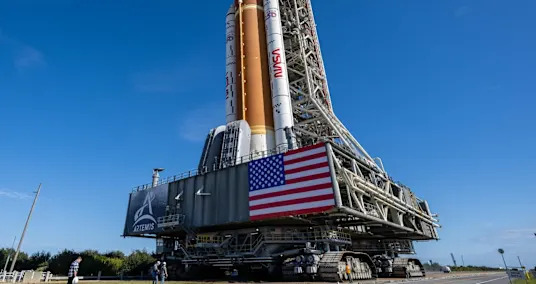
The four-person crew of Artemis II is at Kennedy Space Center in Florida preparing to lift off and travel to the moon as early as Wednesday — and getting ready for any hurdles space may throw at them.
The astronauts' round-trip space journey will cover nearly half a million miles over nine days. They will reach the moon, loop around its far side, and return to Earth. It will be the first crewed moonshot since 1972.
But space is inherently risky — and this is a test flight.
NASA plans for every scenario, and a global team of air force rescuers is on standby ready to come to the aid of the Artemis II crew if circumstances require it. The Air Force's Detachment 3 has coordinated contingency planning and astronaut rescues for NASA since 1959. Members of the unit train hard for a moment that they hope to never see.
"We absolutely never want it to happen," said Lt. Colonel Kevin Pieper, who oversees the unit.
CBS Saturday morning watched unit members conduct a simulation to retrieve astronauts after a mid-launch abort. Here's what the simulation looks like: A C-17 military aircraft hauling 15,000 pounds of rescue equipment heads to the splashdown site. The plane airdrops jet skis, inflatable boats and medical supplies, and a team of pararescue jumpers, or PJs, heads into the water.

The PJs gather the equipment, then bring it to the capsule itself and begin extricating the crew onto the life raft, which holds food, water, survival gear and medical equipment.
Jason Dykstra, a member of the rescue team, said jumpers have little idea what they'll find with the capsule or crew, so they have to prepare for every scenario and for days aboard the life raft.
"We have enough supplies to sustain those astronauts, medically speaking, until help arrives, until we can get them out of there and get them to a higher level of care," Dykstra said. "We are set up to survive in that environment for about 72 to 96 hours."
Multiple teams will be on standby when the Artemis II crew finally launches. Unit leader Pieper said there are several unknowns to prepare for, so every rehearsal helps. Backing up the crew of Artemis II is a "huge responsibility," he said.
"We are here to make sure that they get home safely, if, God forbid, something like this were to happen," Pieper said. "Everyone understands just how important what we're doing is, for not only for the safety of the crew, but for the mission."
Trump says he's extending a pause on Iran energy site strikes
LATEST POSTS
- 1
 Figure out how to Keep up with Your Dental Inserts for Long haul Achievement
 - 2Best Amusement Park in Asia: Which One Is a Must-Visit
- 310 Hints and Deceives to Expand Cell Phone Information Use: Capitalize on Your Information
- 4Iran executes two men who tried storming military facility during January protest crackdown
- 5Vote in favor of the bloom plan that adds a bit of excellence to your life!





- The most effective method to Plan an Incineration Administration: A Bit by bit Guide.
- Japan deploys the military to counter a surge in bear attacks
- The pace of hiring just fell to the lowest since 2011, outside of the pandemic
- Winter storms blanket the East, while the U.S. West is wondering: Where’s the snow?
- Revealing the Incomparable Realms: An Excursion through Power and Inheritance
- UN experts urge investigation into Israel’s killing of Lebanese journalists
- Exploring the Gig Economy: Illustrations from Consultants
- Lilly becomes first healthcare firm to join trillion-dollar club, Wall Street reacts
- This country music star spent years hiding his sexuality. Coming out — and beating addiction — has made his soul feel '20 pounds lighter.'